
Johannesburg does not look like a hill city from inside a car. The highways keep to the contours, the plane trees and jacarandas close over the suburban roads, and the quartzite ridges that decided where every suburb was laid out stay invisible until you are standing on top of one. The quickest correction is a flight of concrete steps off Crescent Drive in Westcliff, climbed slowly, with a long breath at the top.
The 210 steps off Crescent Drive
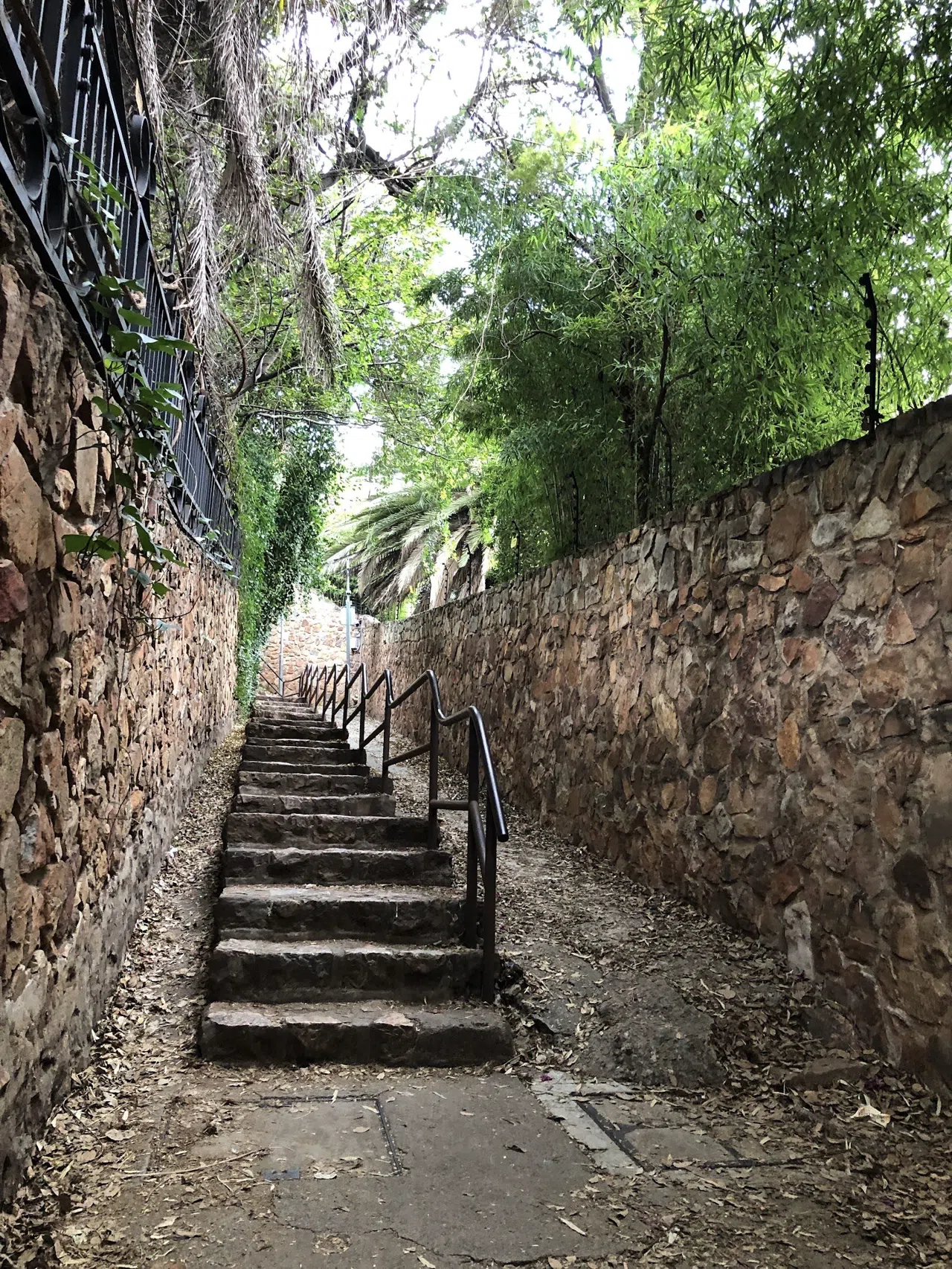
Westcliff Stairs (Westcliff, off 32 Crescent Drive) is not a park or a trail. It is street infrastructure: roughly 210 steps cut into the ridge between the lower and upper halves of the suburb, built between 1929 and 1933 by unemployed men working under the city engineer E J Waugh. The dates carry the story. The Depression reached the Rand with the gold price fixed and the mines shedding labour, and the city's answer was to pay men to build public stairways so that people could walk up a hill they otherwise had to drive around. Almost a century later the stairs still do that job, and they have picked up a second one.
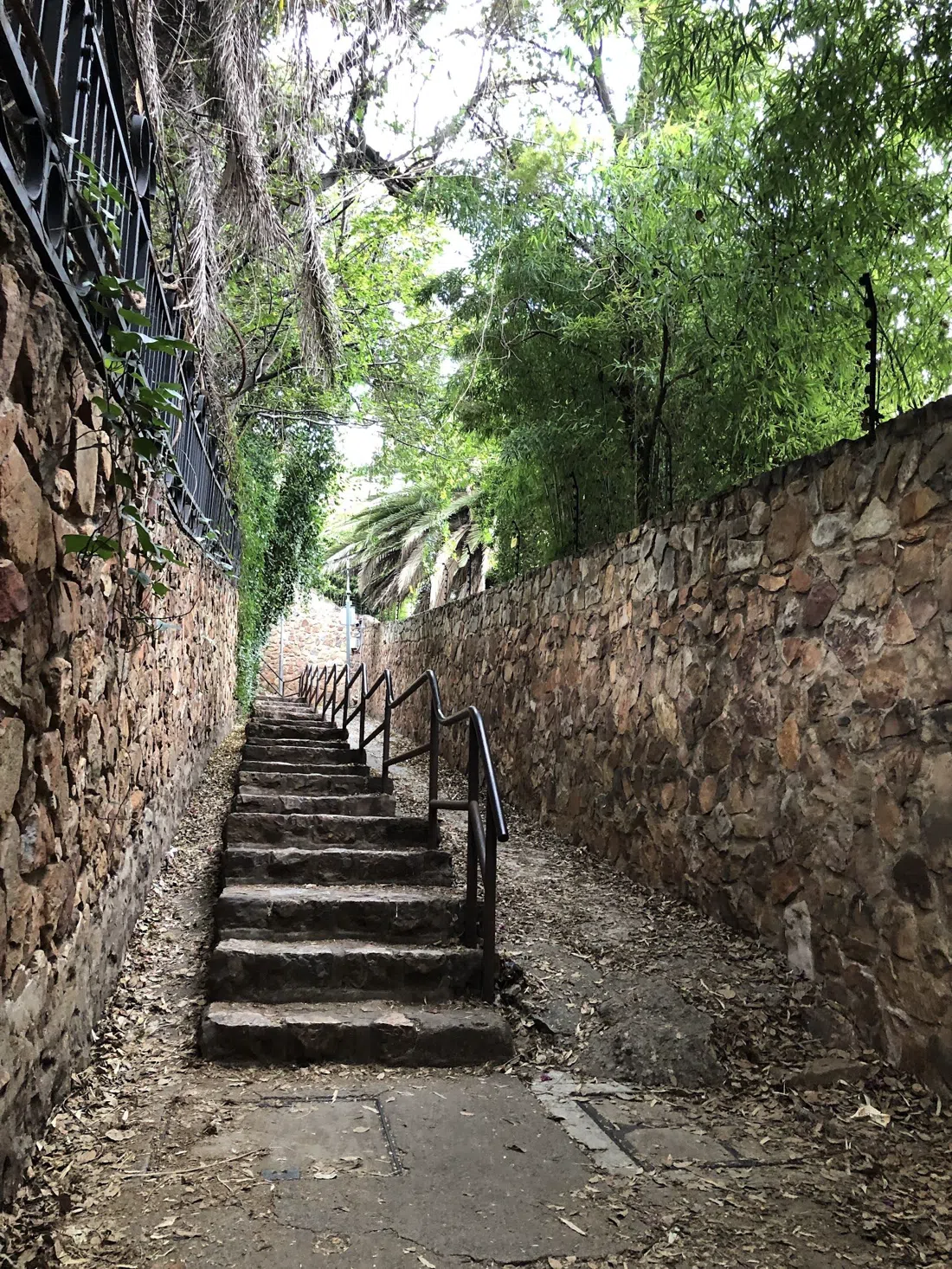
Between roughly 05:00 and 20:00 they function as Johannesburg's stair gym. On a weekday morning you will pass people running repeats with a stopwatch, a couple of club athletes carrying sandbags, and residents walking dogs up to the top for the view over the canopy of the northern suburbs. A single climb at a steady walking pace takes five or six minutes. Doing it three times will tell you more about your fitness than any gym machine.
The treads are uneven, worn down by ninety years of feet, and the descent is harder on the knees than the climb, so grippy soles matter more here than on any of the trails below. There is no door policy, no booking and no charge, and a group of any size is fine. Regulars will tell you to bring one: the stairway is enclosed by vegetation for stretches and sits on a quiet residential edge, and going up alone is the thing they advise against.
The stairs are an introduction rather than a destination. What they show you is that this is a sequence of east-west ridges with a city draped over them, which is why the walks that follow are worth planning a morning around.
Reading the ridge in rock and old workings
Melville Koppies Nature Reserve (Melville) is a national heritage site and the best place to read the Witwatersrand's geology and its pre-colonial iron-smelting history inside one 90-minute walk. A guide will put you on 3-billion-year-old rock, then on the remains of a furnace that was smelting iron here long before anyone thought to look for gold. The access catches visitors out constantly: Melville Koppies Central opens on Sundays only, 08:00 to 11:30, with guided tours at 08:00 and an 8 km hike on the last Sunday of the month. Groups should book ahead on 066 571 9539 or [email protected]. Entry is R100 for adults, R50 for under-18s, free under five, with a R500 annual ticket if you expect to come back. Turning up on a Saturday means a locked gate.
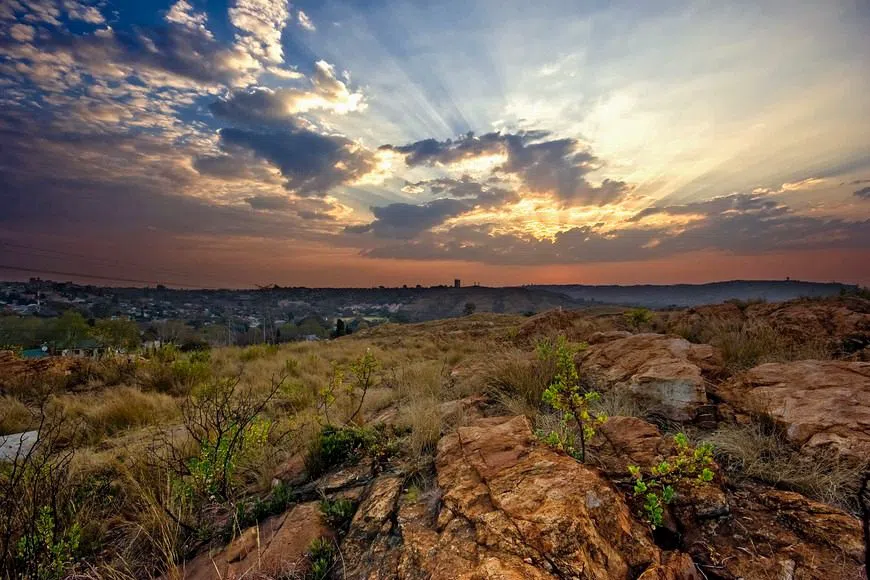
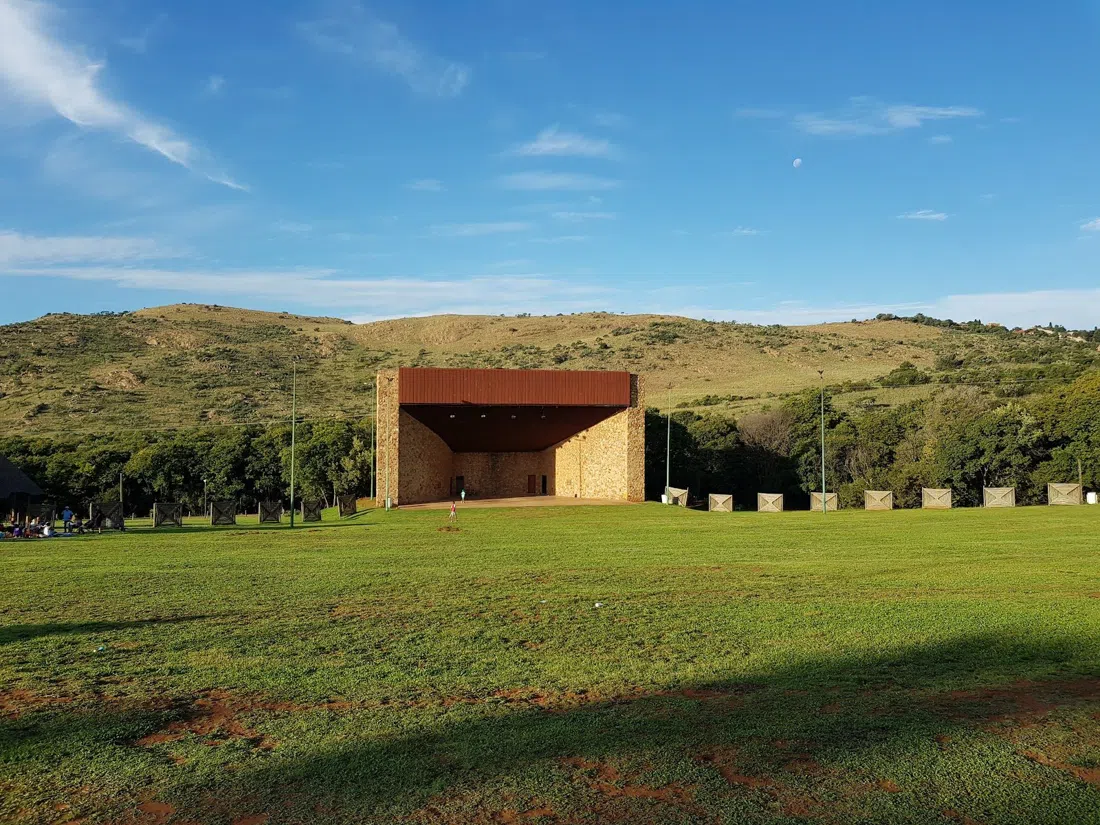
Kloofendal Nature Reserve (Roodepoort, Galena Avenue) is the counterpart on the gold side. Four marked trails run from 700 m to about 5 km, the gate is guarded, parking is ample, and it is open every day including public holidays from 06:00 to 18:00 at no charge. What makes it unusual is the finish: the Confidence Reef, the first proclaimed gold mine on the Witwatersrand, and the reason the city exists at all. Weekend guided walks and the descent into the mine are by appointment and carry a small fee, so book if you are bringing group numbers.
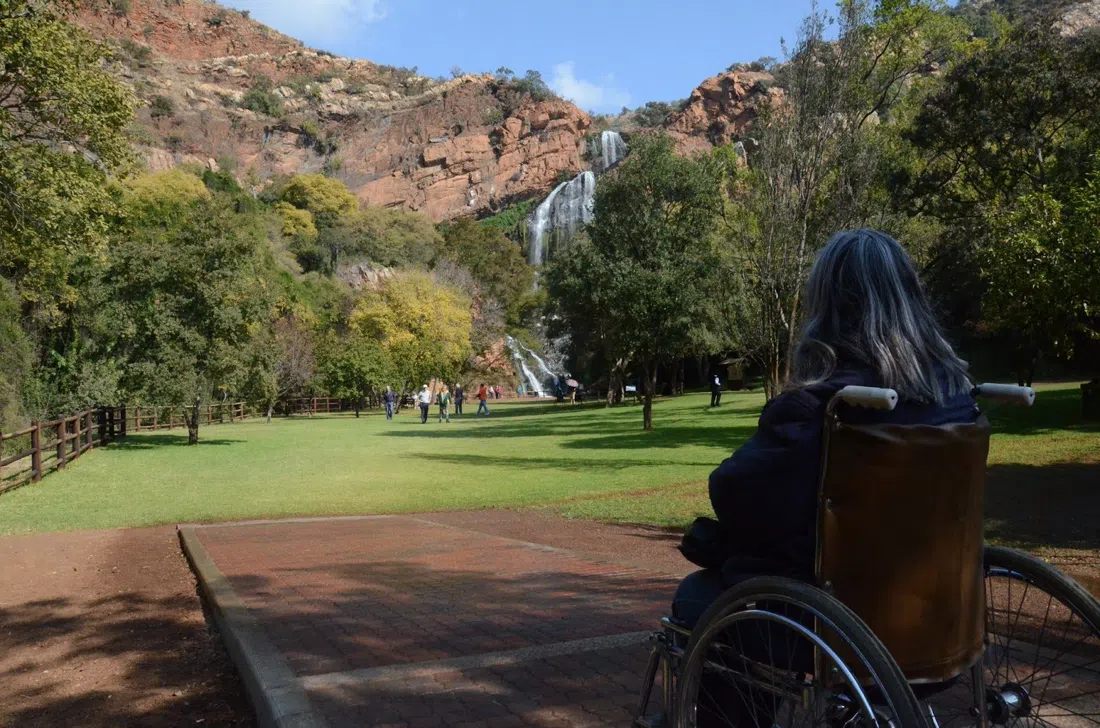
Walter Sisulu National Botanical Garden (Roodepoort) is the version of this walk that suits a mixed-fitness group. The 3.9 km circular Geological Trail reads the whole Witwatersrand sequence, the resident black eagles nesting on the cliff are the real draw, and there is a large car park, a restaurant and proper toilets at the start. Entry is paid: budget roughly R60 to R100 per adult and confirm the current SANBI rate. Larger groups and school parties book through the garden office on +27 12 002 5200. One caveat: the upper section, the steps to the top of the waterfall, was still temporarily closed as of early 2026, with the falls viewable from the lawn instead.
The climbs that pay in views
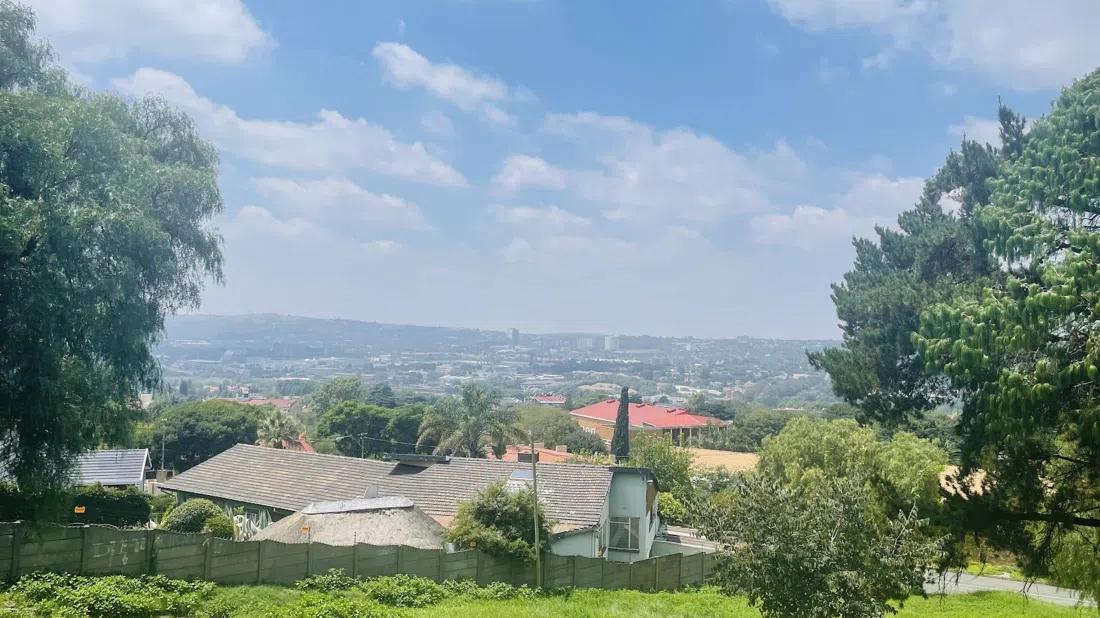
Harvey Nature Reserve (Linksfield Ridge) is the one walk here that visitors almost never find. Park past the boom where Friedland Avenue runs into Beryl Street and climb: a strenuous circular of about an hour on open, unstaffed common land, free to anyone who finds it. The payoff is specific. This is the only spot in Johannesburg where all of the city's landmark towers line up in a single frame, which makes the geography of the place legible in one look. City Parks explicitly advises walking here in a group rather than solo, and the Johannesburg Heritage Foundation ran a guided Linksfield Ridge walk in August 2026, so check their programme if you would rather not navigate the route yourself.
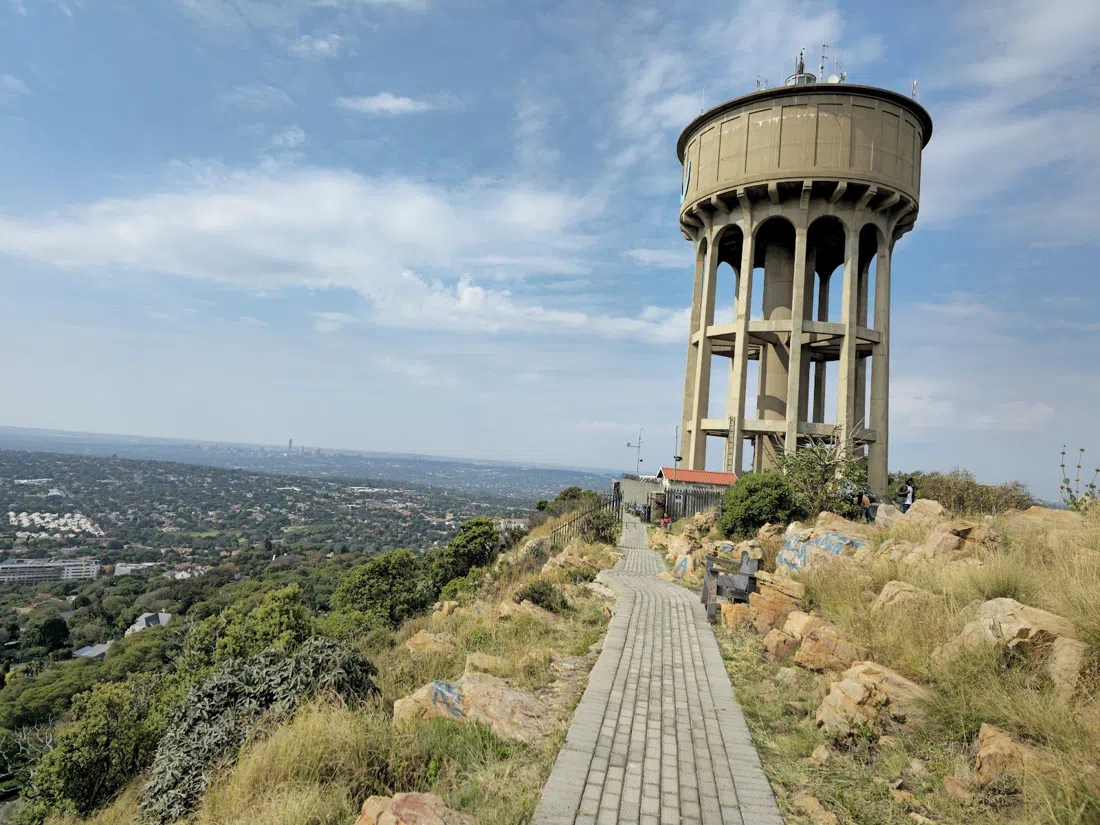
Northcliff Ridge Ecopark (Northcliff) sits on Aasvoëlkop at 1,807 m, the city's second-highest point, and delivers its best free sunset. Include it, but call first. City Parks requires security or staff on site, so opening hours have been cut back and the park closes on some days outright; access has been on-and-off since the 2025 security clampdown and a round of burst-pipe repairs. Arriving with eight people and finding a closed gate is a bad way to spend an evening.
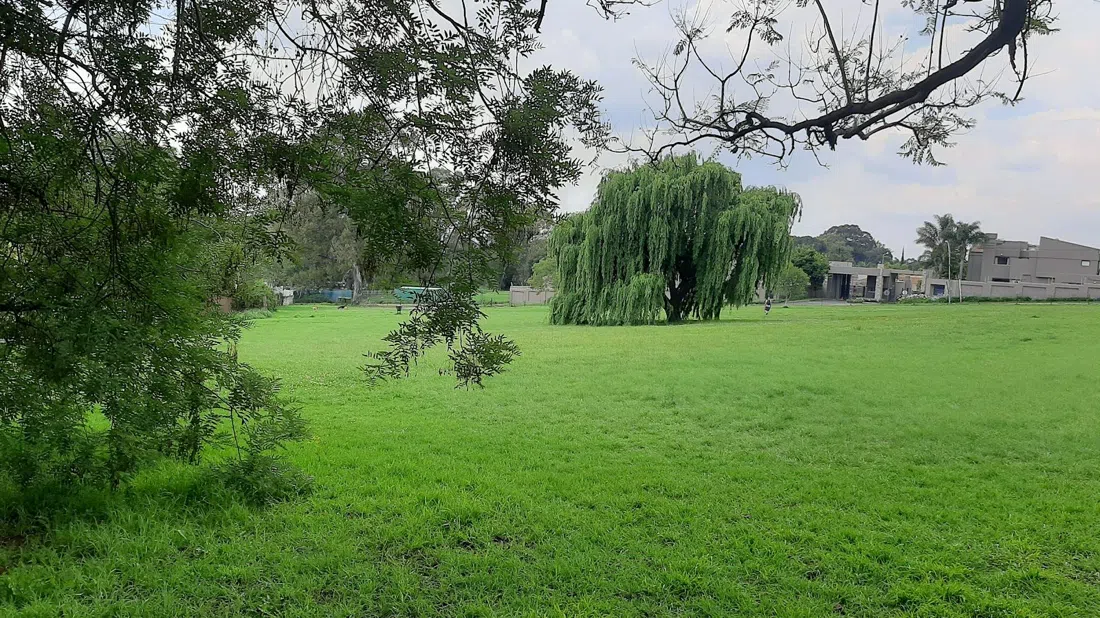
Da Gama Park (Observatory) is a locals' walk on the shoulder of Observatory Ridge, the highest ground in the city, on the open common where Observatory, Cyrildene and De Wetshof meet. It is entirely unfenced and unstaffed: grassland, clean ridge air and a long view, ten minutes from downtown. There are no facilities of any kind, no gate, no guard, no water, no toilet. Bring what you need, go in daylight, and treat it as a 40-minute stretch of the legs rather than an outing.
Two easy walks for a first morning
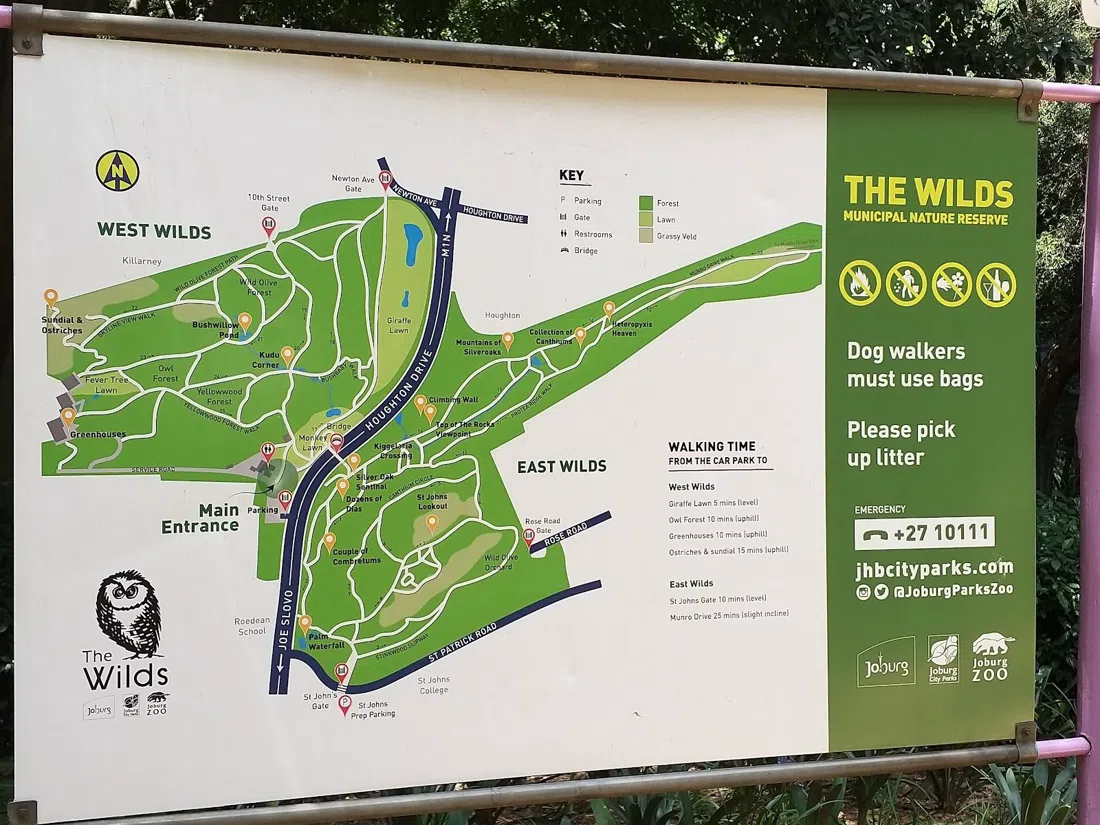
The Wilds Nature Reserve (Houghton) is the gentlest way into this topography and the one to do on your first morning. Sixteen hectares on the Houghton ridge, free, open 06:00 to 18:00, with security guards and secure parking at the Houghton Drive gate and no booking required. For years it was a no-go area. That changed from 2017, when the artist James Delaney began installing work through the paths: 67 owls and around a hundred other sculptures now, which turn a steep hillside of terraces and steps into something you follow rather than just climb. It suits couples, families and anyone with an hour to spend.
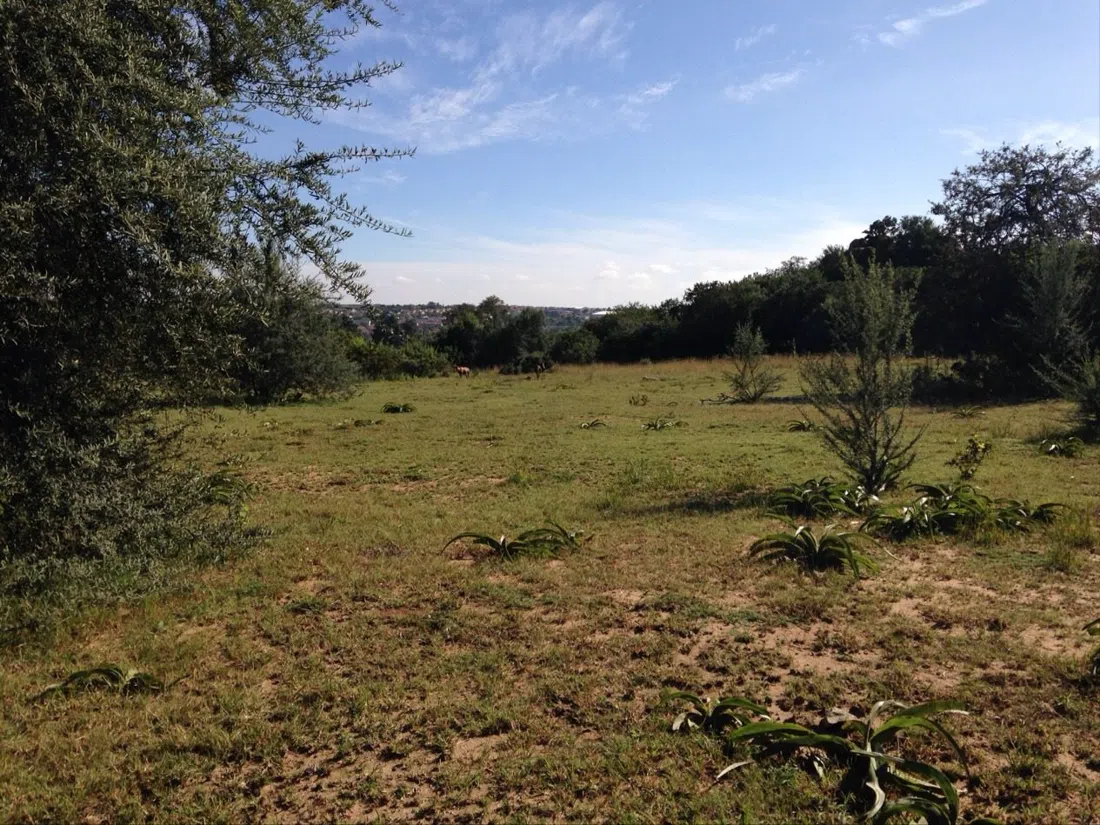
Norscot Koppies Nature Reserve (Fourways, off Alexander Avenue) is small, volunteer-run and almost invisible to visitors because of its opening pattern: the second and last Sunday of the month only, until 17:00. Sign in at the gate. There are three to five kilometres of easy trail with a couple of short rocky scrambles, entry is free with a donation towards upkeep encouraged, and small groups need no arrangement. Larger parties should call ahead. If your Sunday lines up with it, take it.
Longer trails on the city's edges
Klipriviersberg Nature Reserve (southern Johannesburg) is the serious one: 650 hectares, 20 km of trails and real game, the largest proclaimed reserve inside any South African city. It is southern Johannesburg's answer to everything the northern suburbs get credit for, and it is free to walk self-guided, gates open 06:00 to 18:00 daily. The Association's guided walks run on the 2nd and 4th Sunday and the 1st and 3rd Wednesday at 07:30, with group walks by arrangement; booking and advance payment are essential via [email protected], at R50 an adult, R30 a child or R100 for a family of five.
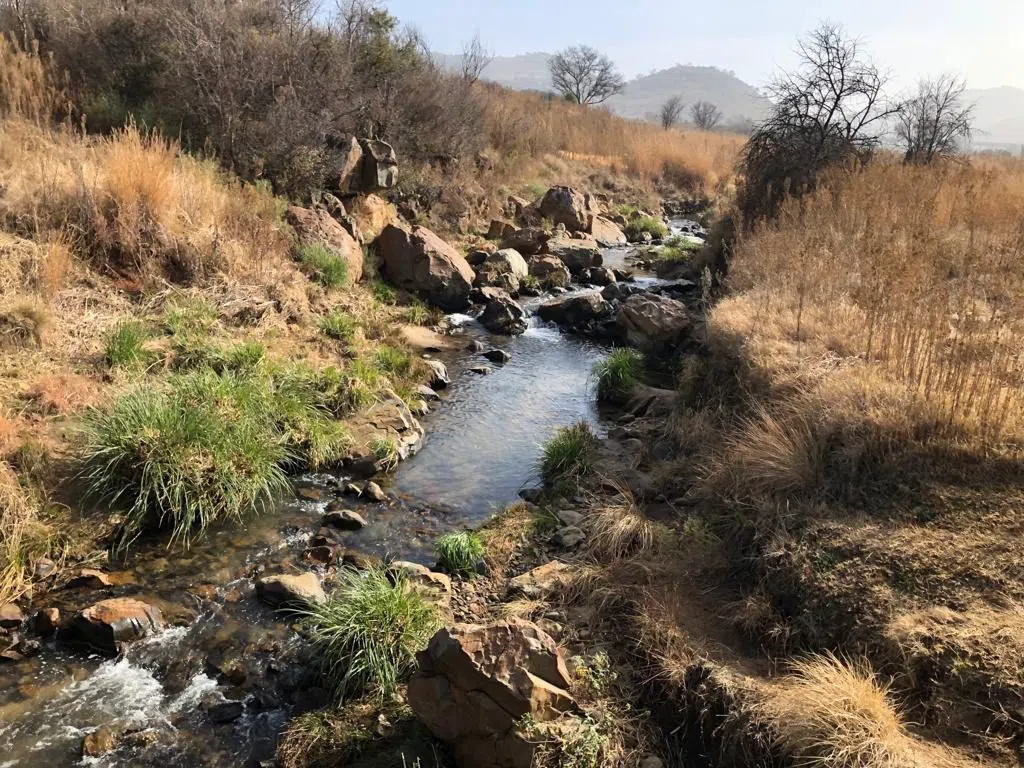
Modderfontein Reserve (Modderfontein, east) is the easiest place in the city to put a whole group on a proper trail. Eight routes run from 2 km to 11 km across the grounds of the old AECI explosives estate, the marking is good, and it is open 06:00 to 18:00 every day including public holidays at no charge. There is a free 5 km parkrun every Saturday at 08:00, plus guided walks and conservation talks; organised trail-run events are priced separately.
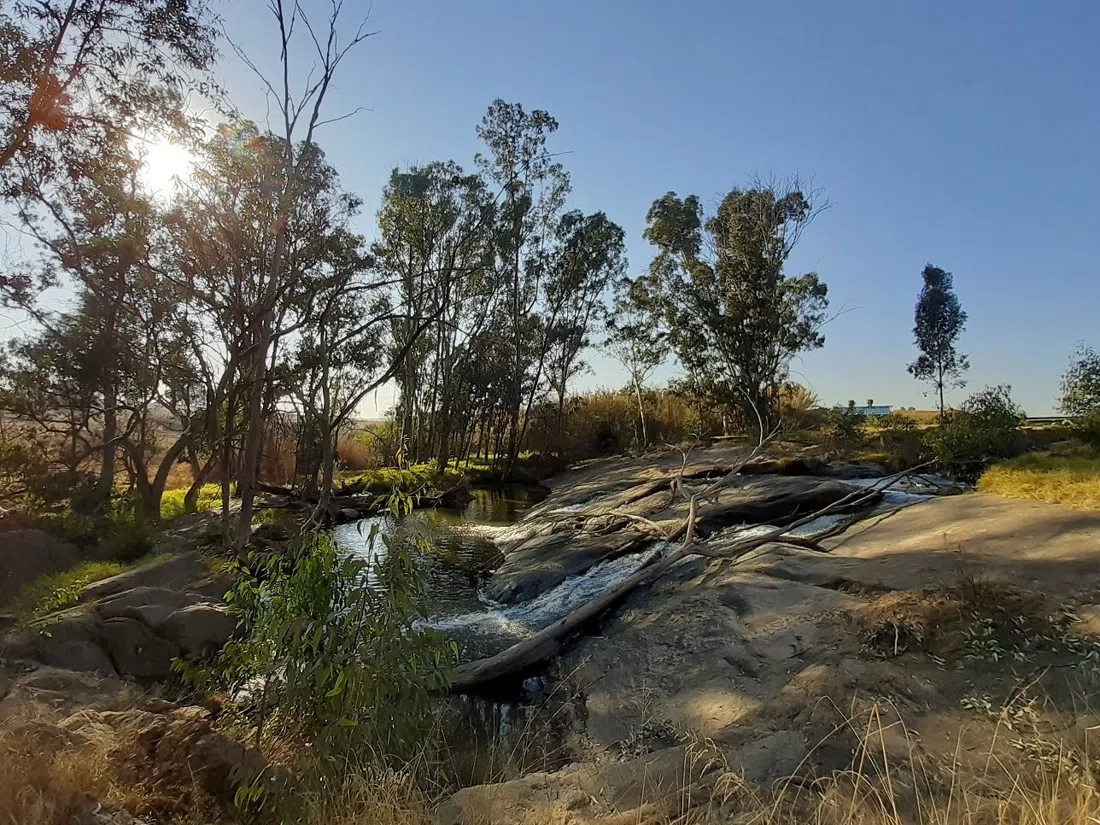
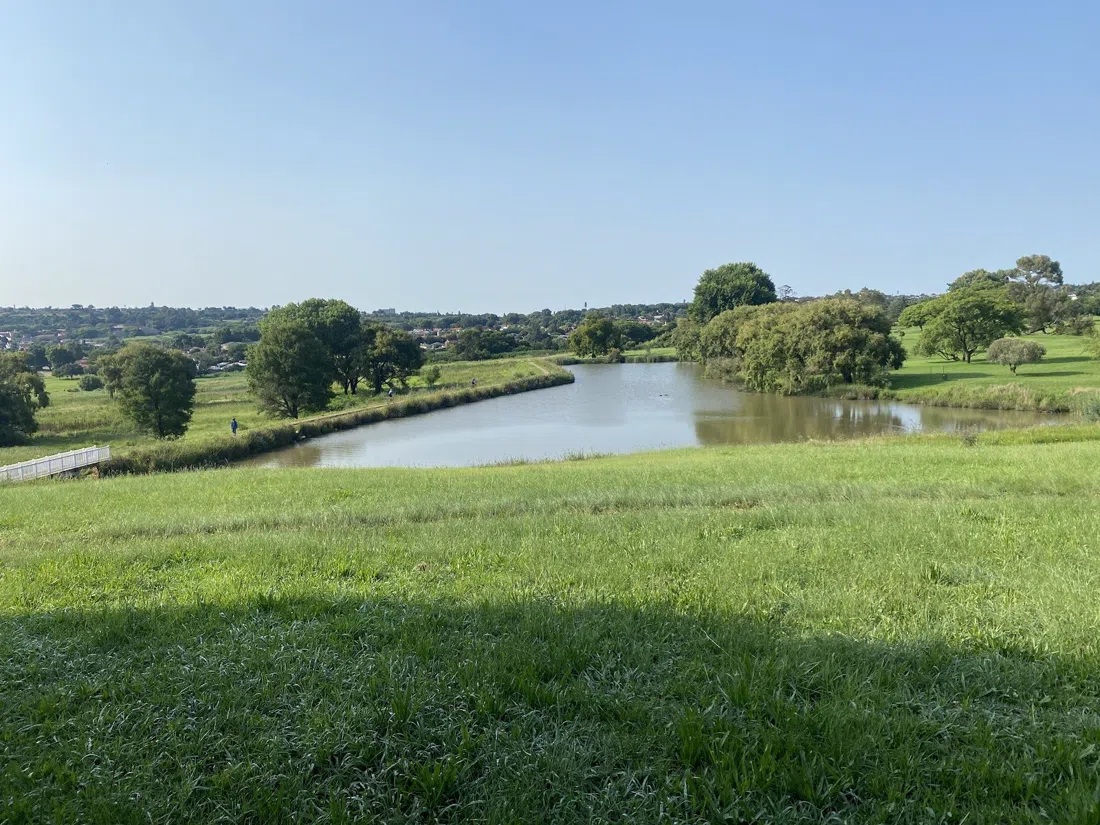
Delta Park and the Braamfontein Spruit Trail (Blairgowrie) gives you the closest thing Johannesburg has to a through-hike. The spruit is the city's longest continuous walkable corridor, free and always open, and you can string Emmarentia Dam to Delta Park to Bryanston into a half-day on foot. Park at Delta Park, at Emmarentia Dam or at the Sandton Field and Study Centre. The Jozi Trails volunteers maintain the route; City Parks recommends walking the spruit sections in groups of five or more, which is standard local practice here rather than an unusual warning.
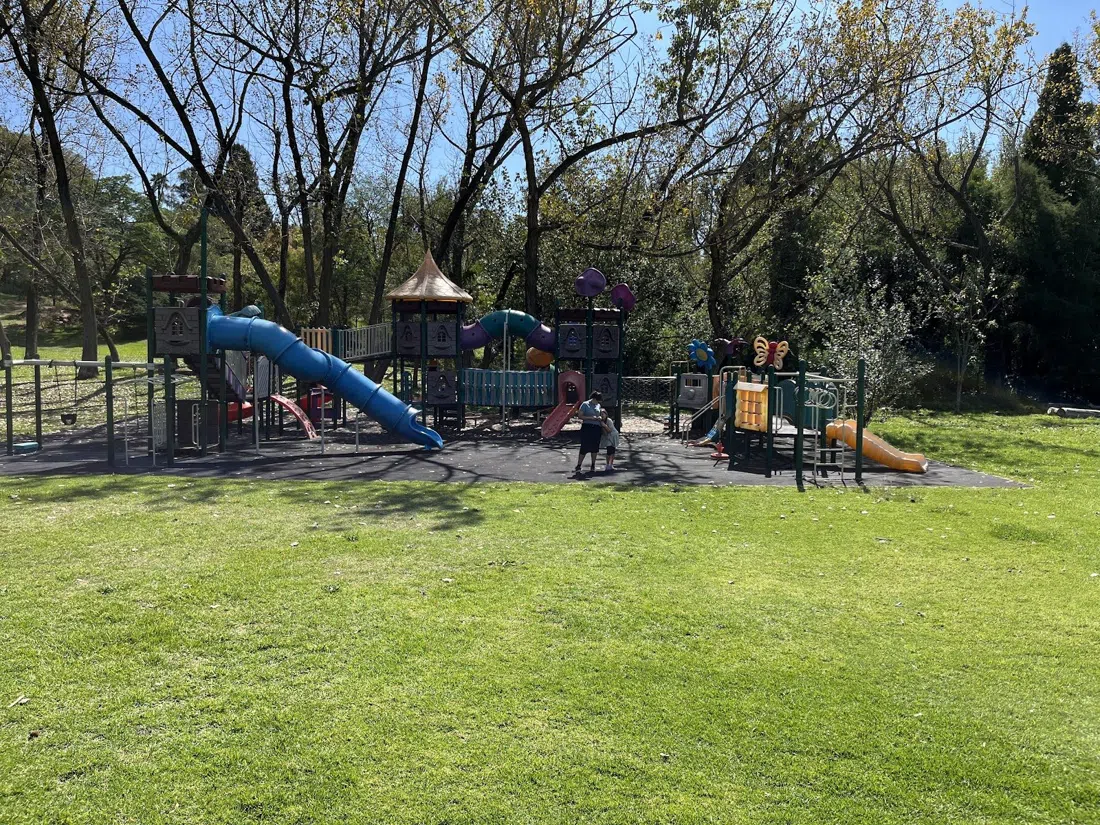
Alberts Farm Conservancy (8th Street) is the city's second-biggest green lung after Delta Park and a volunteer conservation success running since 1996: open grassland, unfenced, free. Two problems were flagged to City Parks in early 2026 and are worth stating plainly, muggings near the connecting gate and a badly eroded walkway near one of the main entrances. Walk it in numbers and in daylight. The two reliably social options are the Saturday 08:00 parkrun and the conservancy's own 5 km walk on the third Sunday of each month.
The walk that goes up instead of along
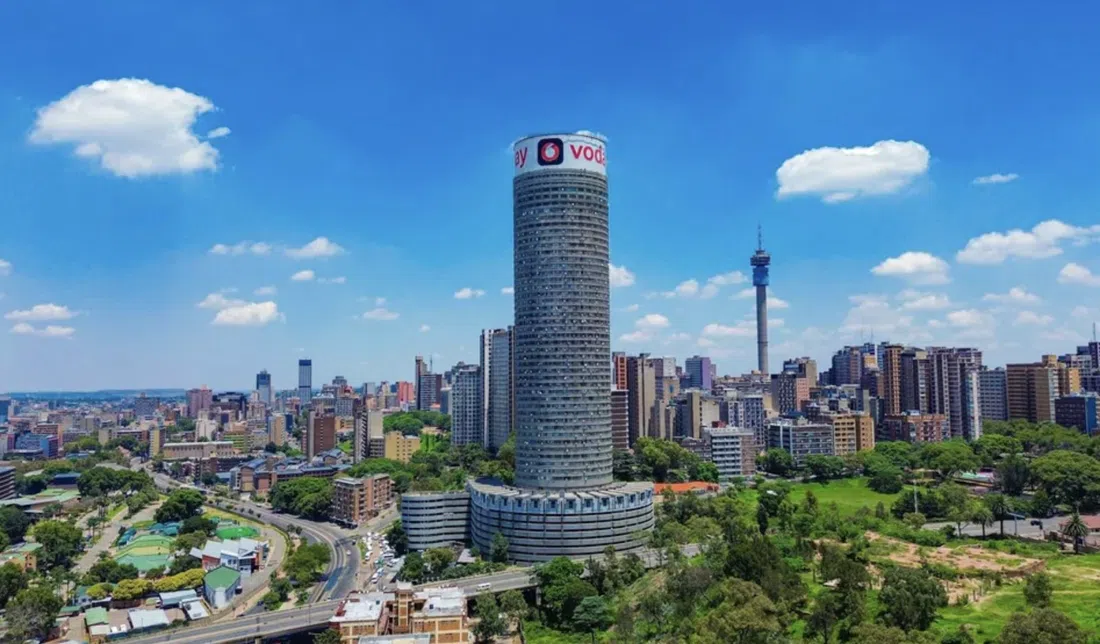
Dlala Nje (Hillbrow, at Ponte) is the vertical counterpart to all of this. A non-profit founded in 2012 and run from inside Ponte itself, it offers the only legitimate way into the tower, paired with a street walk through Hillbrow led by people who live there. Scheduled and private group tours run daily from the Ponte entrance (tell security you are there for Dlala Nje), and you book direct on dlalanje.org or +27 67 082 8168. It is paid and mid-range; confirm the current rate when you book. This is not a place to wander into on your own, and the tour is the point: the ridge that the Westcliff stairs climb is the same ridge the tower reads from above, and hearing the city explained from fifty-odd storeys up rearranges everything you walked earlier in the week.
Walking in numbers, and why everyone says so
City Parks, the conservancies and the reserve associations all repeat the same line: walk in a group, in daylight. Read that as local operating procedure, not as a reason to stay in the hotel. The staffed sites are straightforward. The Wilds, Kloofendal, Klipriviersberg, Modderfontein and the botanical garden all have a gate, a guard or both, and you can park inside. The open commons (Harvey, Da Gama Park, Alberts Farm and the spruit sections) have none of that, and those are precisely the ones to walk with company, early, with a car key in your pocket instead of a wallet and the phone out of sight. Three people on a Saturday morning is all it takes.
Transport, cash and timing
Assume a car or an e-hailing app. There is no useful public transport to any of these trailheads. From a base near the Gautrain at Park Station or Rosebank, a short e-hail reaches the Westcliff stairs, The Wilds and Melville Koppies; Klipriviersberg, Modderfontein, Kloofendal and the botanical garden all want a car and sit 30 to 45 minutes from the northern suburbs.
On money, most of this is free. Carry small notes for the Melville Koppies gate (R100 adults, R50 under-18s) and for Norscot's donation box, book and pay for Klipriviersberg's guided walks in advance by email, and budget roughly R60 to R100 per adult at the botanical garden. A full week of walking here costs under R300 a head once you set aside the Ponte tour.
Time everything around Highveld weather. In summer, from October to March, thunderstorms build through the afternoon, so be on the trail by 07:00 and finished by 10:00. From May to August the mornings are cold and dry, the grass turns gold, the air goes clear and the views from Linksfield Ridge and Northcliff run for fifty kilometres; this is the better hiking half of the year by a wide margin. You are walking at around 1,750 m throughout, so the first climb will feel harder than your fitness suggests.
Staying in Westcliff, Parktown or Rosebank puts the stairs, The Wilds and Melville Koppies within ten minutes of the door. Start with the Johannesburg hotel search to compare those areas. For everything else the city does once you have come down off the ridges, see the Johannesburg guide.