
Johannesburg stands close to 1,800 metres above sea level, high enough that the whole 'mile-high' cliché undersells it, and for eight months of the year that altitude turns into weather you can watch arrive from a rooftop table: towering thunderheads building over the northern suburbs by mid-afternoon, a curtain of rain crossing the CBD an hour later, and a scrubbed, electric sky by the time the sun drops toward the mine dumps on the horizon. The city's rooftop bars and its handful of genuine viewpoints didn't invent that theatre. They just claimed the best seats for it.
Sundowners on the city's tallest ledges
Alto234 (Marshalltown, inner-city CBD) makes no secret of what it's selling: Africa's highest urban bar, full stop, and the entry fee is really a table booking for the exact altitude and storm-watching angle the whole Highveld-sky idea is built on. It costs R390 a person on top of drinks, which puts it at the high end of this list, and the door runs a proper smart-casual code with no exceptions on weekend sunset slots, which fill up. Book ahead if there are more than two of you. It's the one bar here where the view genuinely is the entire product; go on a clear evening in the shoulder months, March to April or September, once a storm has just cleared, when the light does something no photograph quite carries.
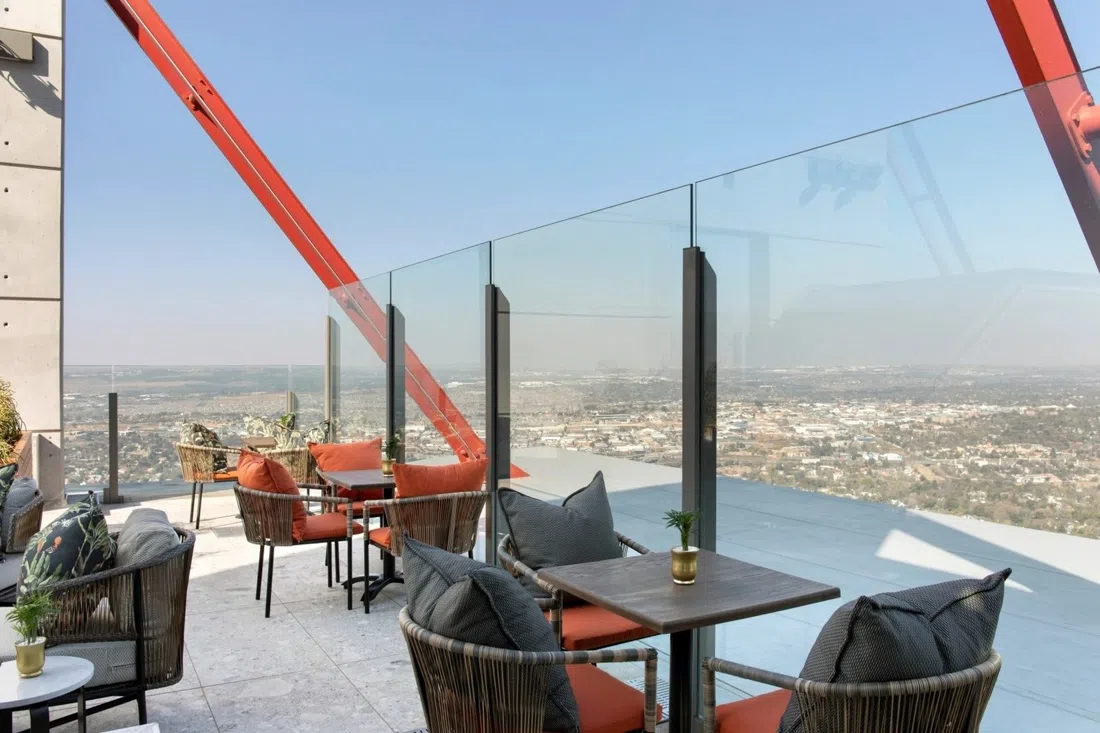
San Deck, on top of the Sandton Sun & Towers hotel complex (Sandton), is the older, calmer answer to the same brief. It's open to the public as well as hotel guests, cocktails run R120-180, and the fire pits are there for a specific reason: the Highveld drops temperature fast once the sun goes, even after a 30°C day, and Sandton's rooftop crowd has been dealing with that since long before rooftop bars were a trend. Groups are welcome with a reservation, and it reads as the more predictable booking of the tower bars: a corporate after-work crowd on weeknights, a broader mix at weekends.
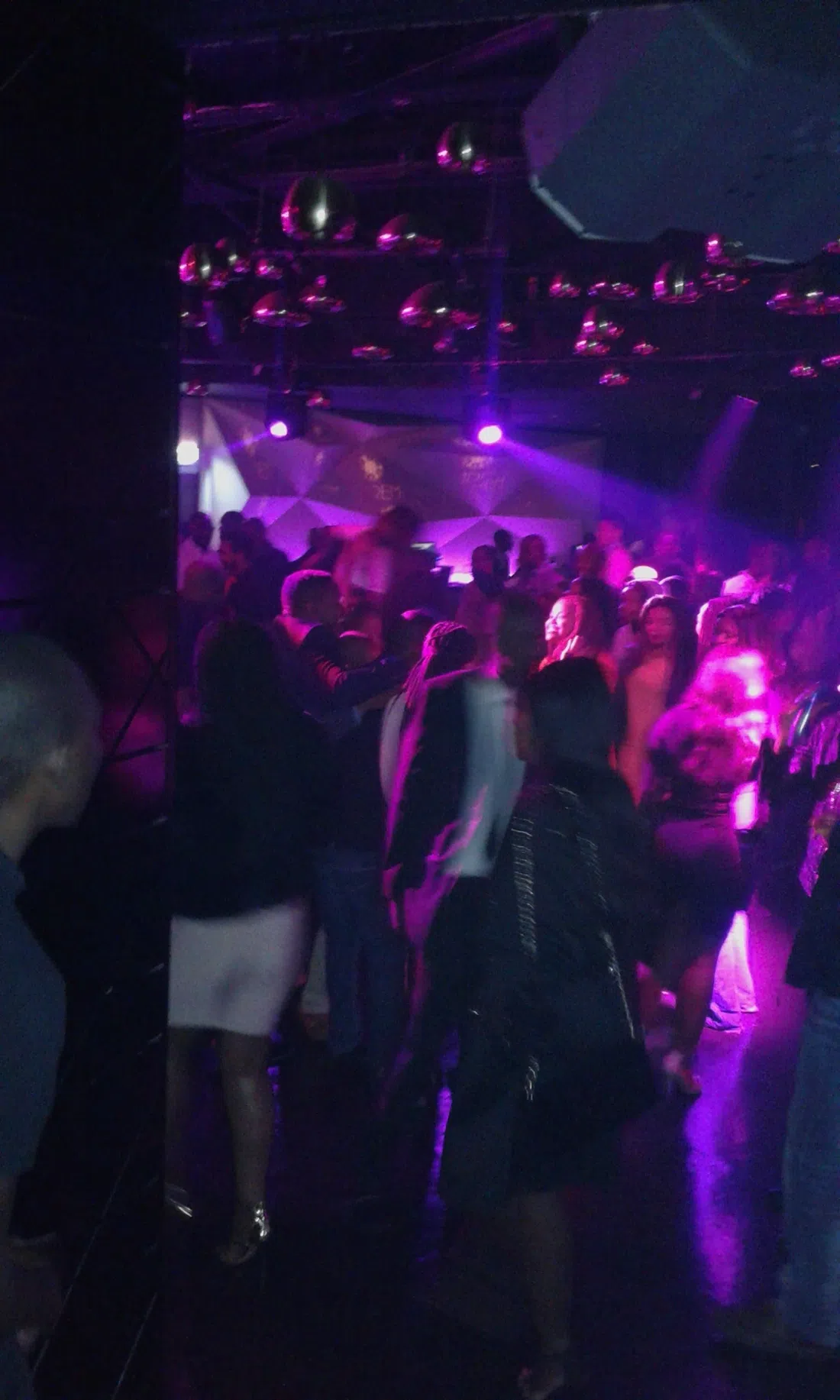
Kong Rosebank (Rosebank) belongs in this group geographically rather than in spirit. It's a nightclub with a rooftop element more than a sundowner bar, and it's honest about that: a strict door policy (no sneakers, no activewear), VIP tables strongly advised for groups on Friday and Saturday, and a table minimum spend that puts it near the top of the price range on this list. Skip it for golden hour and book it, if at all, as the last stop of the night rather than the first.
Rooftops that grew out of the inner city
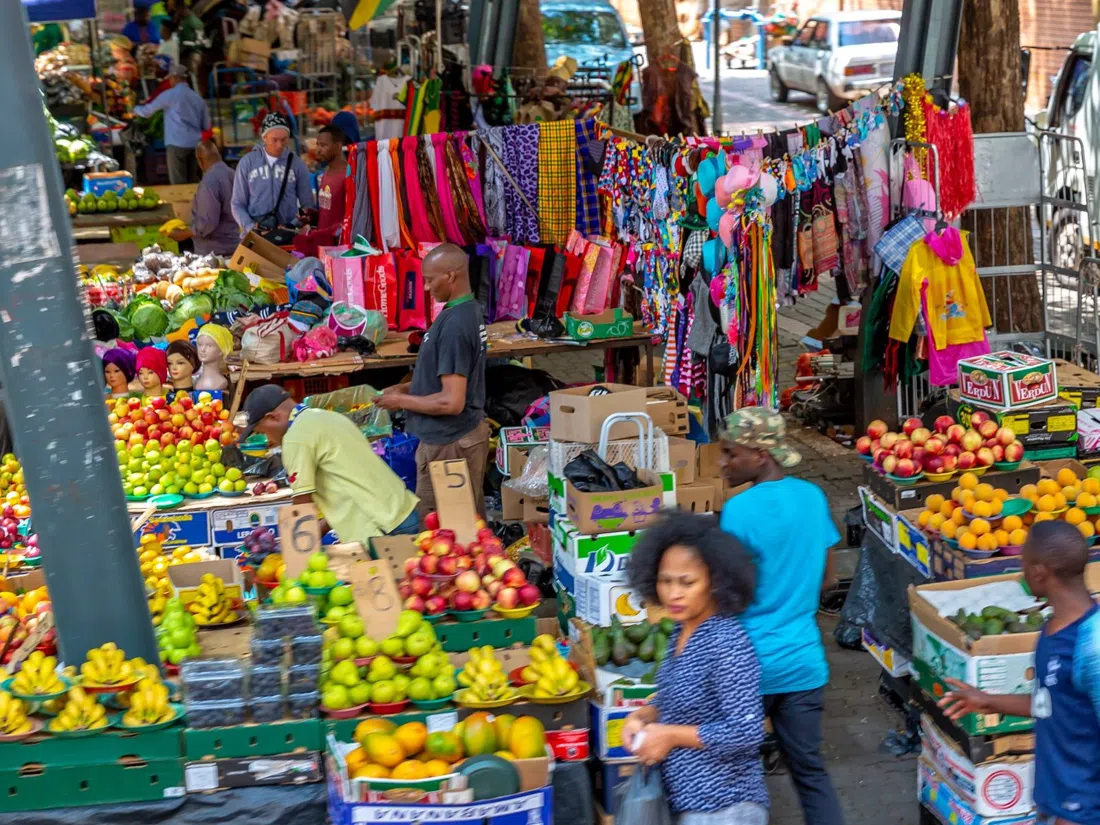
Not every rooftop in Johannesburg is glass and altitude. A cluster of bars in the regenerated inner city read the skyline from street level up rather than from a tower down, and they tend to be more forgiving on dress code and door policy as a result.
Pata Pata (Maboneng) is named after the Miriam Makeba song, and it's the rare rooftop here where the music matters as much as the view: expect a full band or DJ on weekend nights, communal tables, and a crowd that came to dance as much as to watch the sky. It's mid-range, groups are welcome, and it's worth booking ahead specifically on live-music nights, when it fills fast.
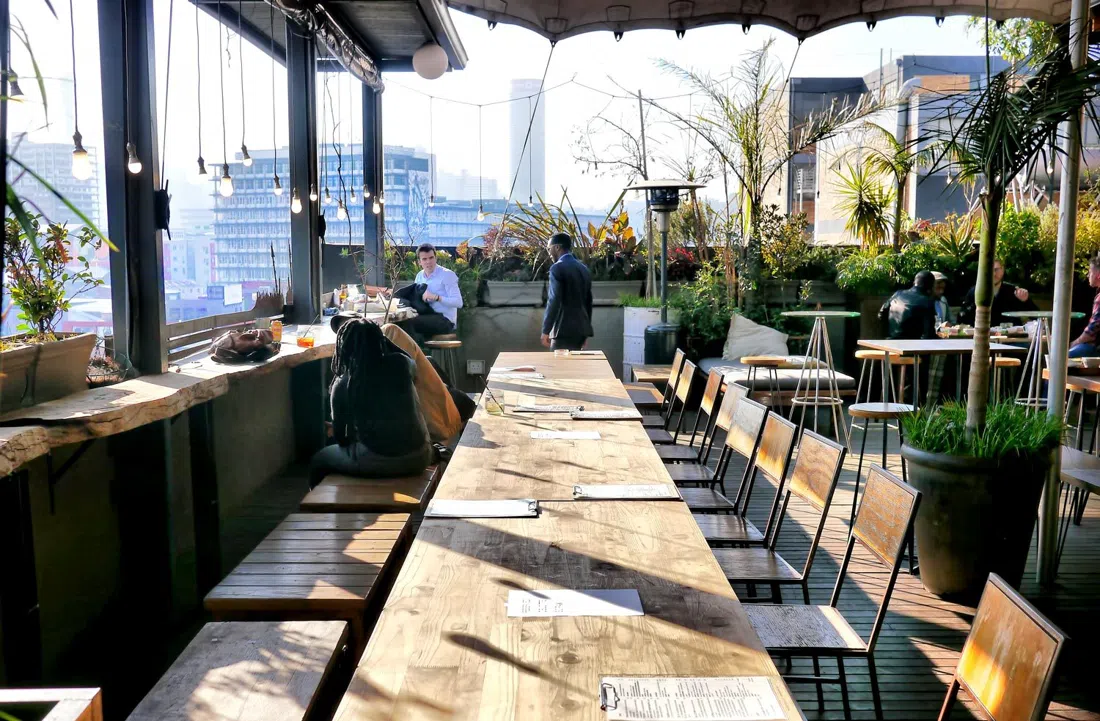
Living Room (Braamfontein, on the edge of downtown) leans hard into plants and shade, which isn't really an aesthetic choice so much as a practical answer to how exposed and hot the inner city gets by late afternoon. It's budget-to-mid, closed Monday and Tuesday except for private events, and at its best on a weekend when the DJ crowd turns up. Private hire is also available for anyone planning something larger.
12 Decades Art Hotel's rooftop (Maboneng) does double duty, a yoga deck by day and a bar by night, which fits the area's earnest regeneration-district energy better than most. It's budget-to-mid and groups are welcome, especially for weekend sundowners, but it can queue once word gets round that the evening's busy, so arrive on the earlier side.
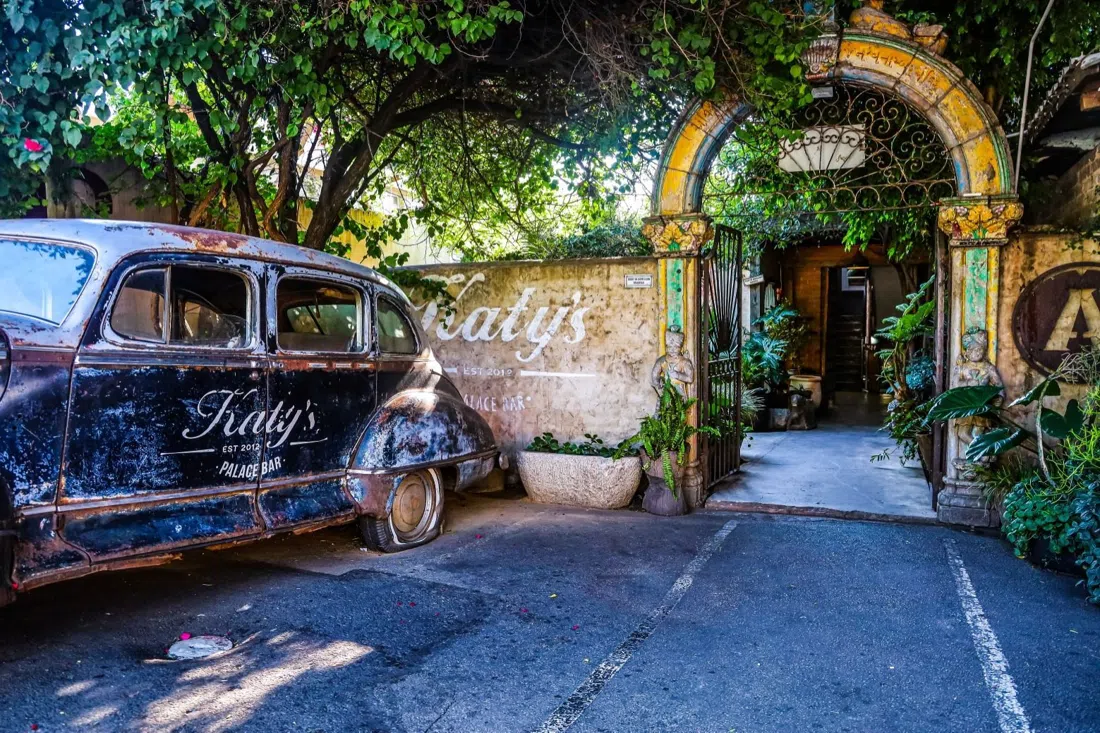
Katy's Palace Bar (Fourways, northern suburbs) isn't a rooftop in the tower sense at all: it's a 500-square-metre open-sky venue built specifically around Highveld sunsets, with room for 500 people cocktail-style. Its Sunset Sundays are public nights and often free entry with drinks, which makes it the most accessible group booking on this list; it's built for large parties rather than an intimate two-top.
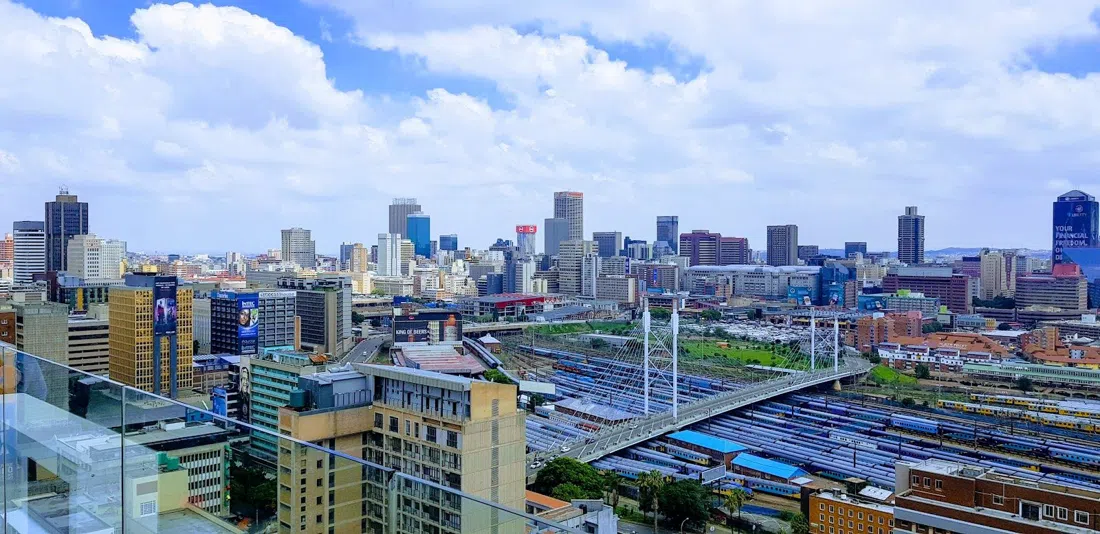
Randlords (Marshalltown, CBD edge) has one of the most photographed skyline views in the city, and it needs a clear caveat: it is not a nightly bar. It runs mainly on private and corporate hire, and opens to the public only on selected monthly event nights. Check its calendar before making plans around it: turning up expecting a walk-in rooftop means turning around at the door.
The ridge above the grid
Johannesburg's altitude story isn't only about towers. The northern ridge running through Westcliff and Houghton sits on the same geology as the CBD's skyscrapers, just under tree canopy instead of glass, and it gives a quieter version of the same view.
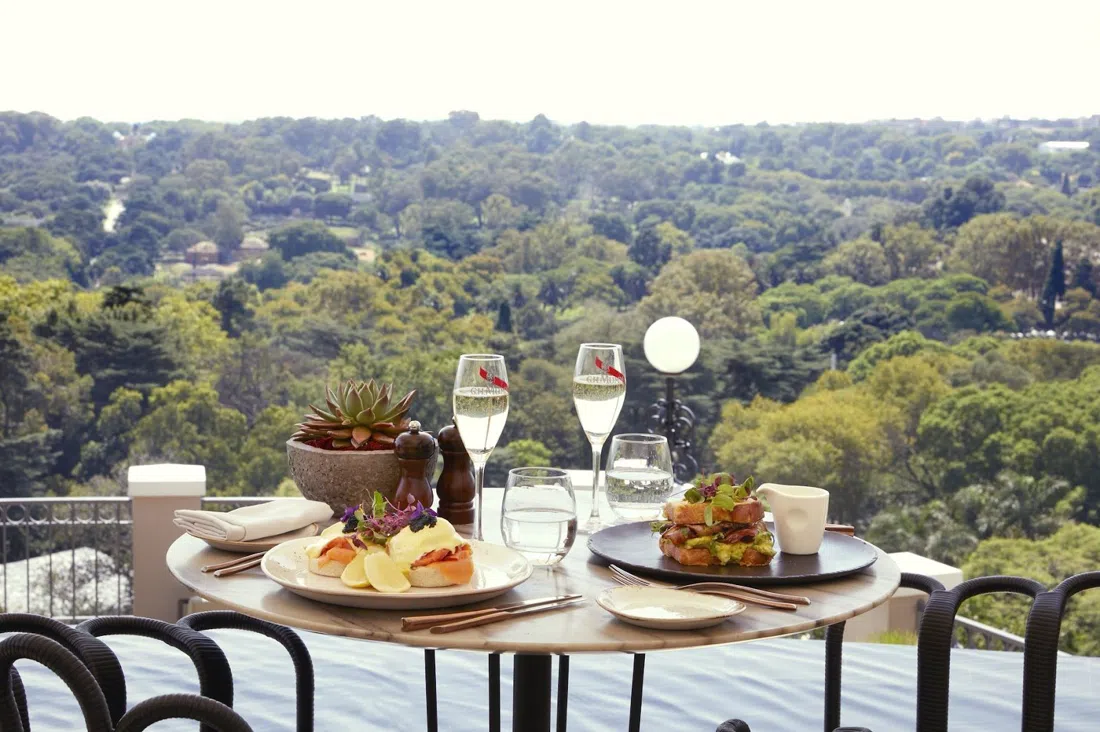
Flames, the rooftop restaurant and bar at the Four Seasons Hotel The Westcliff (Westcliff), is the fine-dining, book-ahead version of that idea: a treetop view over the ridge rather than a glass-tower one, reservation-based, and comfortably in the high-end bracket. Groups are fine here but this isn't a walk-in spot; call ahead.
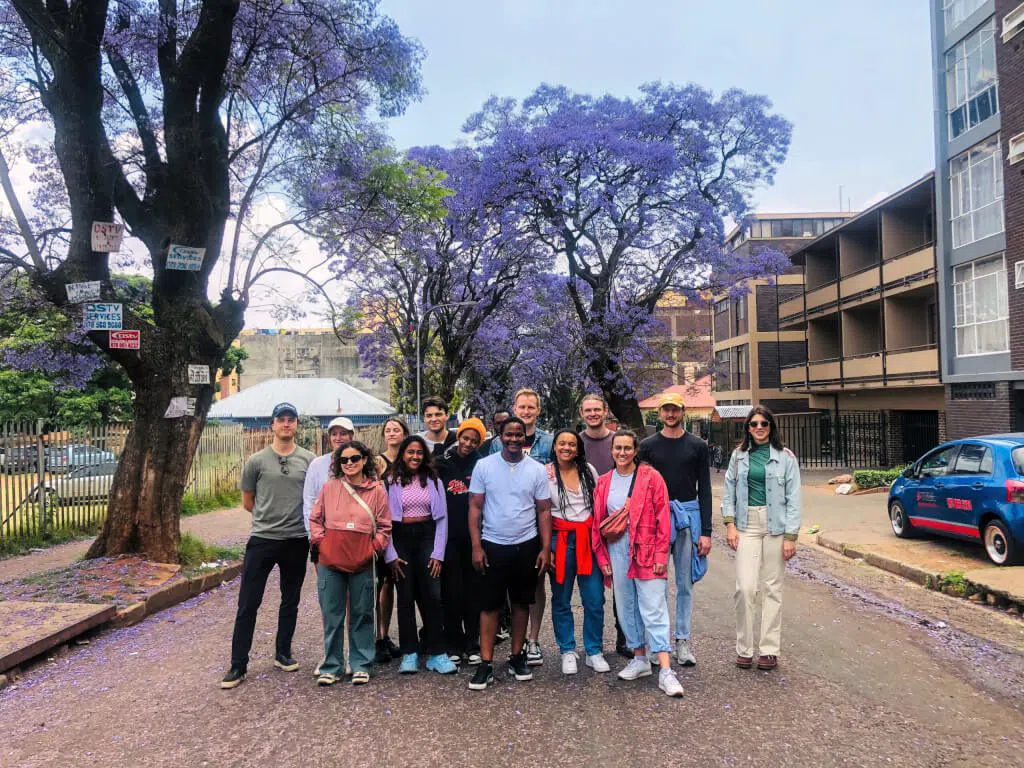
Munro Drive (Houghton, on the ridge toward Killarney) costs nothing and needs no booking. It's a free, unstaffed roadside viewpoint best reached by car, with no facilities and no lighting once the sun's gone, so daylight or early-evening visits are the sensible ones. It's at its most photographed in jacaranda season, October and November, when the purple canopy runs down toward the CBD skyline, and it's also a good spot to watch a storm front build, provided you're driving away from it rather than into it.
The Wilds (Houghton Estate) is the outdoor-life counterpoint to everything else on this list: a free, public inner-city nature reserve with genuine Highveld cloudscapes and no bar tab attached. It's fine to visit in a group, and it's worth being straightforward about the one caveat: go in daylight. It's an inner-city reserve with a patchy safety record when it's quiet, which is less a reason to skip it than a reason to time the visit for a weekend afternoon with other people around.
Viewpoints worth buying a ticket for
Three stops on this list aren't bars at all, and they may be the most honest way into the altitude story, because they're built to be looked from rather than drunk on.
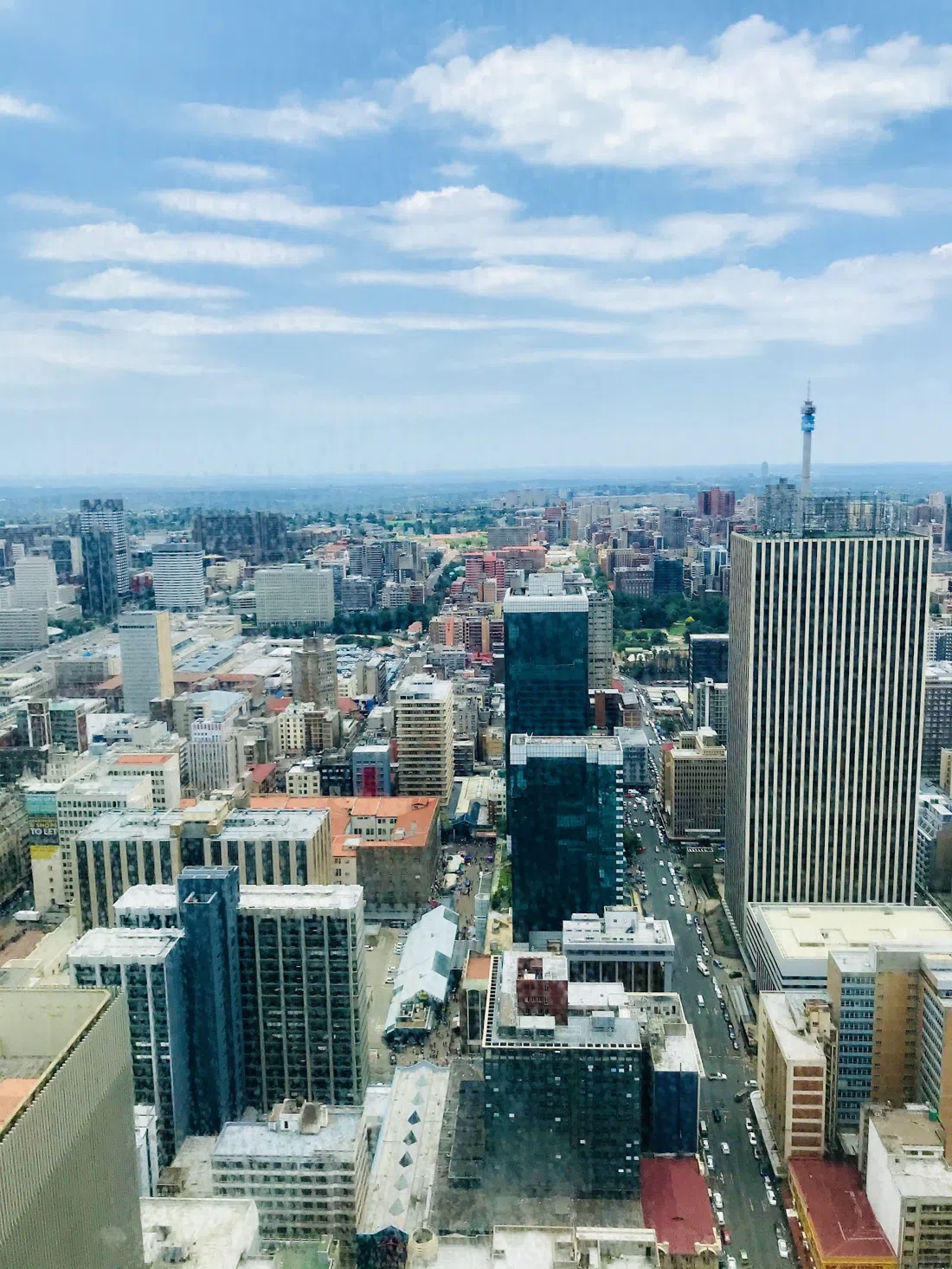
Top of Africa, the observation deck at the Carlton Centre (CBD), is the purest version of the how-high-is-this-city question: Africa's tallest building for decades, and still the most direct answer, for around R100 entry. It's budget, it takes tour groups and families without friction, and it's best visited in the build-up to a Highveld thunderstorm, when the cloud stacks are visible for kilometres in every direction before the rain arrives.
Ponte Tower Sundowners, run by the community organisation Dlala Nje (Berea, at the base of Ponte Tower in Hillbrow), is the most editorially defensible entry on this list. The tour is pre-booked, actively welcomes groups, and costs R450-650, money that funds Dlala Nje's after-school programme for children living in the tower. It pairs a genuinely striking sundowner view with a building whose own story, from aspirational high-rise landmark to a long inner-city decline and back to a working, community-run address today, says more about Johannesburg than any skyline photo does alone.
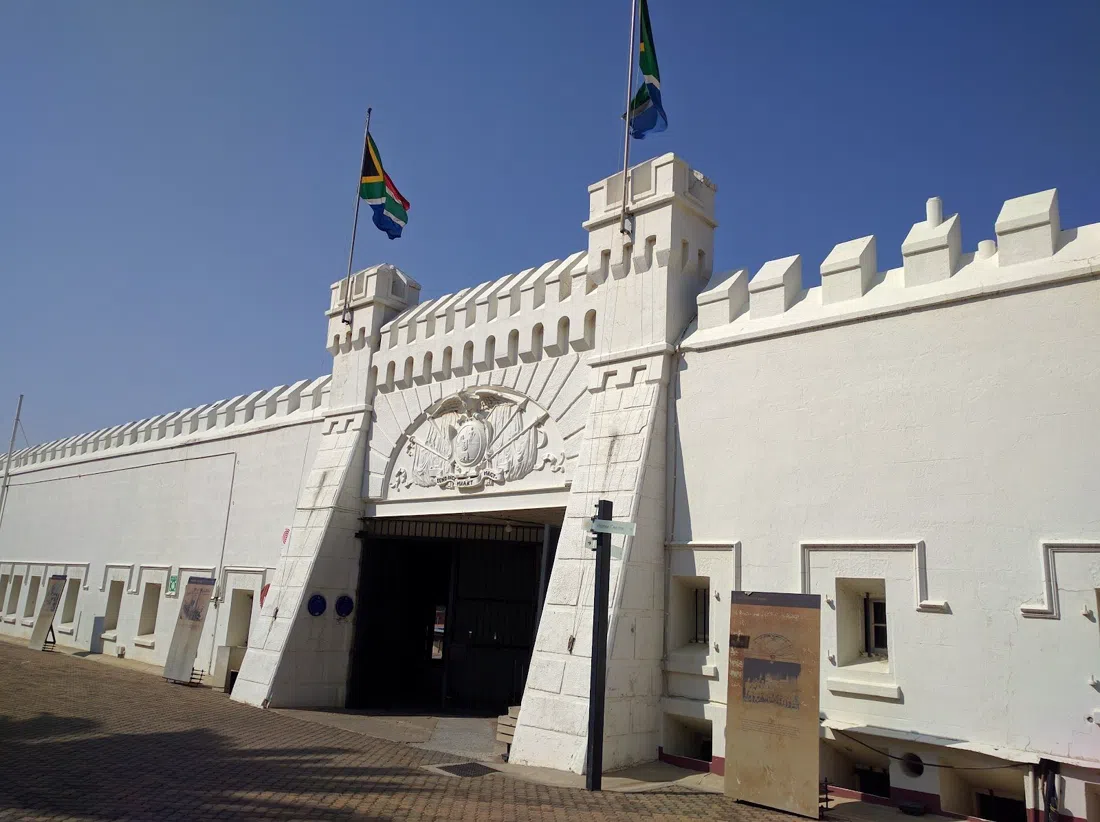
Constitution Hill (Braamfontein, bordering Hillbrow, on the site of the old Fort prison) can be seen for free on the ramparts or as a guided tour for R90-150, and it's worth doing both: the free walk for the view over the CBD and the northern suburbs, and the guided route for the history the view sits on top of: a prison that once held both common prisoners and political prisoners, including Mahatma Gandhi during his time in South Africa and later Nelson Mandela, and is now the site of South Africa's Constitutional Court. Group rates are available and it suits a guided group especially well if the history is the point of the visit rather than the skyline.
Planning the evening
Johannesburg's rooftop scene rewards a bit of logistics more than most cities' do, mostly because of distance and weather rather than the venues themselves.
Transport. Distances between these areas (Sandton, Rosebank, Maboneng, the CBD, Westcliff, Fourways) are real, often 20 to 40 minutes by car depending on traffic, and Johannesburg isn't a city to navigate on foot between areas after dark. Book an Uber or Bolt for each leg rather than assuming you can walk between two rooftops in the same evening, even within an area that looks compact on a map.
Cash and cards. Cards are accepted everywhere on this list; carry a small amount of cash for tips and for entry at ticketed viewpoints like Top of Africa, where card readers can be slow or unavailable at peak times.
Timing around the weather. October to April is thunderstorm season on the Highveld: afternoon storms are common and usually clear within an hour, so a delayed sundowner is a better plan than a cancelled one. May to September is the dry, clear season: colder at night, worth packing a layer even on a warm afternoon, but far more reliable for an uninterrupted view. Jacaranda season, October and November, is worth timing a visit to Munro Drive or The Wilds around specifically.
Budget. This list runs from free (Munro Drive, The Wilds, the Constitution Hill ramparts) to R390-plus before drinks (Alto234), with most venues sitting in the R120-250 mid-range. Only Alto234 and the ticketed viewpoints charge for the view itself; everywhere else, the cost is whatever you order.
If you're building a stay around this, a base in Sandton or Rosebank puts most of the list within a short drive; start with the Johannesburg hotel search and check the Johannesburg guide for the rest of the city beyond its rooftops.